Selected Inorganic chemistry chapters for NEET exam preparation in 2026
Inorganic Chemistry is one of the most scoring portions of the Chemistry NEET syllabus. Because inorganic chemistry seems simple and mostly factual, many students start their preparation late thinking they can handle it later. Inorganic Chemistry is relatively approachable because it depends just 30% on memorization and 70% on reasoning and understanding.
Before beginning their preparation, candidates should make a list of the inorganic chemistry chapters for NEET. Examining each chapter's weight and associated marks is always advised by NEET experts and toppers. The benefits of being acquainted with the weightage of the chapters are numerous:
- The students can dedicate more time to the chapters that carry the highest weightage.
- It helps to predict the pattern of the NEET exam, as well as distribution of questions.
- Based on NEET inorganic chemistry weightage, a systematic and balanced revision plan could be prepared.
Inorganic Chemistry Weightage in NEET
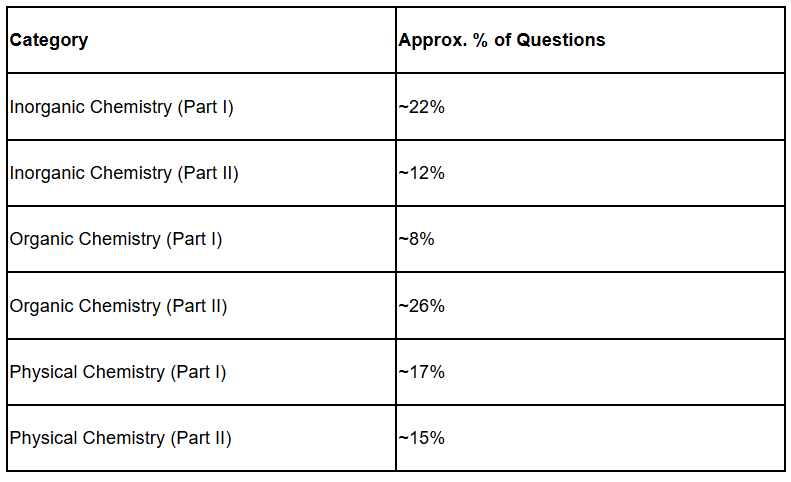
To score well in the inorganic chemistry chapters, the first requirement is to know the inorganic chemistry weightage in NEET. Inorganic chemistry normally carries approximately 30-35% OF questions in NEET chemistry. That is almost 12-15 questions straight from NCERT-based theory. This makes inorganic chemistry chapters for NEET a high-return investment for aspirants aiming to maximize their score with focused effort.
The students who are preparing for NEET 2026 Chemistry are required to know the weightage of each chapter. The NEET Chemistry Weightage, in this case, will help in concentrating on the chapters, which are of greater importance for the exam. After going through the previous 5 years' question papers and using the best study material to prepare for NEET Chemistry, they will be able to clearly know on which topic they need to work on more. It also makes revision smarter.
The NEET Chemistry syllabus consists of 3 sections:namely Physical Chemistry, Organic Chemistry, and Inorganic Chemistry. Aspirants should know the weightage of each individual section before beginning their preparation if they are aiming to score 650-700 marks. It provides a clear idea regarding the distribution of marks per section and consequently the preparations become more focused and result-oriented.
Inorganic Chemistry NEET Syllabus
The inorganic chemistry NEET syllabus is clear and strictly follows the NCERT Class 11 and 12 textbooks. This clarity helps the candidates to organize their study routine effectively. From Periodic Table in Class 11 to Coordination Compounds and p-Block in Class 12, the syllabus leaves little room for surprises. When you fully align inorganic chemistry chapters for NEET with NCERT, you automatically cover most of what the exam requires.
Most aspirants make the mistake of reading from several reference books which creates major confusion among them. For inorganic chemistry, NCERT is more than sufficient, but for practicing questions, students can follow 1 reference book.
Instead of rushing through chapters, spend time understanding trends, exceptions, and major factual terms. When you follow a good routine, you can easily cover the inorganic chemistry chapters for NEET. That sense of order builds confidence, which reflects directly in your performance.
Inorganic Chemistry Chapters List for NEET
Having a clear inorganic chemistry chapters list for NEET helps you break preparation into daily manageable goals. Rather than viewing inorganic chemistry as a massive section, try to learn this section strategically.
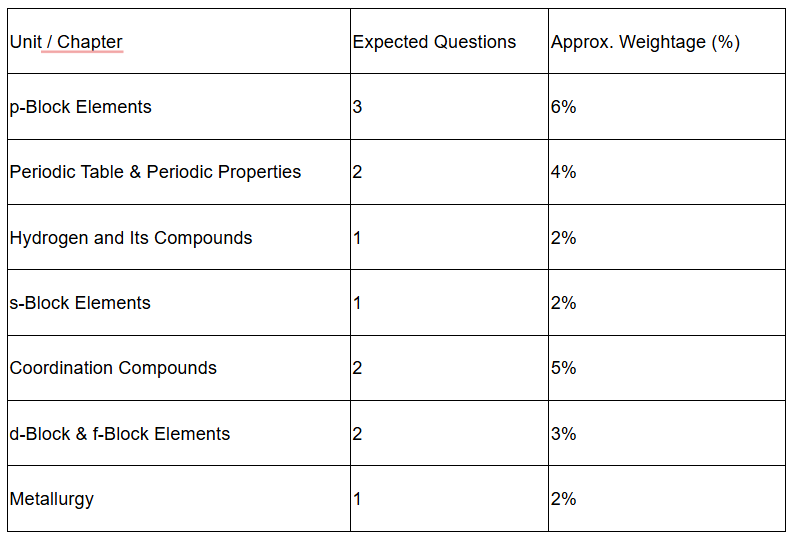
The main chapters are Periodic Classification, Coordination Compounds, p-Block Elements, d and f Block Elements, Metallurgy, and Environmental Chemistry. Reading every chapter requires a specific technique as some of them are logic based whereas others are memory based. Being aware of this helps you in determining how to study each one.
Let’s have a look at the detailed inorganic chemistry chapters list for NEET:
Do’s and Don’ts during your NEET chemistry preparation
Do’s
- Focus on NCERT before proceeding to reference books.
- Follow a good revision routine.
- Solve easy and moderate MCQs after learning every chapter.
- Attempt mock tests and analyze your mistakes.
- Follow your own handwritten notes for revision.
Don’ts
- Do not jump to solve advanced level questions after reading a concept. Start with easy ones.
- Do not ignore revision.
- Don’t keep the whole inorganic revision for the last month. This will create more confusion.
Chemistry Books for NEET Preparation
Chemistry is considered as a medium scoring subject as compared to physics in the competitive exams like JEE and NEET.
For Chemistry, candidates should study the below-mentioned books :
- NCERT Chemistry Class 11 Textbook
- NCERT Chemistry Class 12 Textbook
- PrepMed’s Study Material(Level 1 and Level 2)
- Concise Inorganic Chemistry by JD Lee
How to Study Inorganic Chemistry for NEET?
Cracking NEET is challenging, as it is considered one of the most competitive exams in India. Achieving a high score requires regular practice, smart planning, and a clear understanding of important topics. Students who are preparing at home should focus not only on repeated revision but also on tracking chapter-wise weightage, especially for Chemistry, to prioritize high-scoring areas. Being aware of the inorganic chemistry chapters for NEET can help students allocate their time more effectively. Below are some effective strategies to strengthen your NEET Chemistry preparation:
1. Start with NCERT Textbooks:
For beginners, NCERT Class 11 and 12 Chemistry books should be your top priority. Many NEET questions are directly based on NCERT content, so thoroughly studying these books lays a strong foundation. This is especially important for mastering the inorganic chemistry chapters for NEET, as questions are often theory-based and NCERT-oriented.
2. Solve MCQs on a Daily Basis:
After completing each chapter, dedicate at least 1-2 hours daily to practicing NEET-level Chemistry MCQs. Consistent problem-solving improves speed, accuracy, and confidence. Regular MCQ practice also helps you better understand frequently tested concepts from inorganic chemistry chapters for NEET.
3. Create Concise Notes and Formula Sheets:
Maintain a separate notebook for short notes, reactions, exceptions, and formulas. These quick-reference notes are extremely helpful during last-minute revisions and mock tests, saving valuable time.
4. Attempt Mock Tests and Previous Year Questions:
Regularly take NEET mock tests and solve previous years’ question papers to familiarize yourself with the exam pattern and difficulty level. Analyzing your performance helps identify weak areas and fine-tune your preparation strategy, ensuring steady improvement.
With consistent effort, smart revision, and focused attention on important chapters, especially in Chemistry, you can significantly boost your NEET performance.
Conclusion:
Inorganic chemistry requires strategy, consistency and discipline. When approached with patience and the right strategy, it becomes one of the good scoring sections in NEET chemistry. Focus on NCERT, continue revision, and trust the process. With consistent effort, this subject can easily boost your rank and confidence on the main exam day.
FAQs:
1. How many questions come from inorganic chemistry in NEET?
On average, 12–15 questions in NEET Chemistry are asked from inorganic chemistry, making it a significant scoring area.
2. Is NCERT enough for inorganic chemistry preparation?
Yes, NCERT is more than sufficient. Most NEET questions are directly or indirectly based on NCERT content.
3. Which inorganic chemistry chapter is most important for NEET?
Coordination Compounds and p-Block Elements are considered the most important due to their consistent weightage and direct questions.
Also read:
Our locations: Kolkata (Hazra Rd, Opp. Jatin Das Park), Garia, Berhampore, & Sodepur.
How to study physical chemistry for NEET in 2026?
Recent Posts

Explore the PrepMed NEET 2-Year Courses List

West Bengal GMC Round Cutoff Prediction for NEET 2026 | YouTube Live

All India Quota Medical College List 2026: MBBS Course

List of MBBS Colleges in Jharkhand: Seats and Process

NEET for the Economically Weaker Section (EWS)